HOPE Champion guides childcare organizations through personalized changes using the HOPE framework
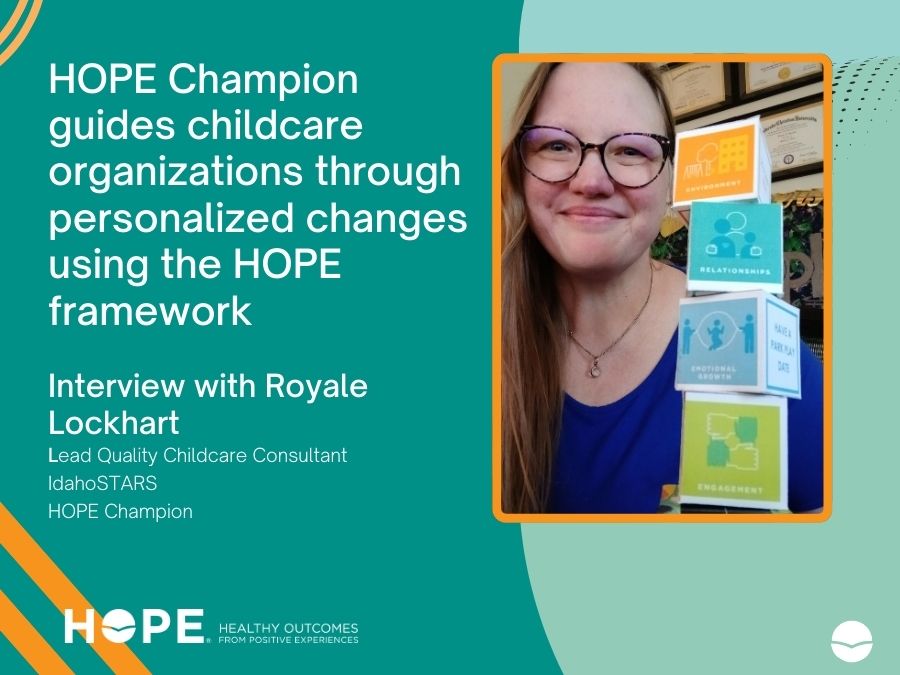
HOPE Champion, Royale Lockhart, shares how COVID-19 and the HOPE framework changed her work with children and families.
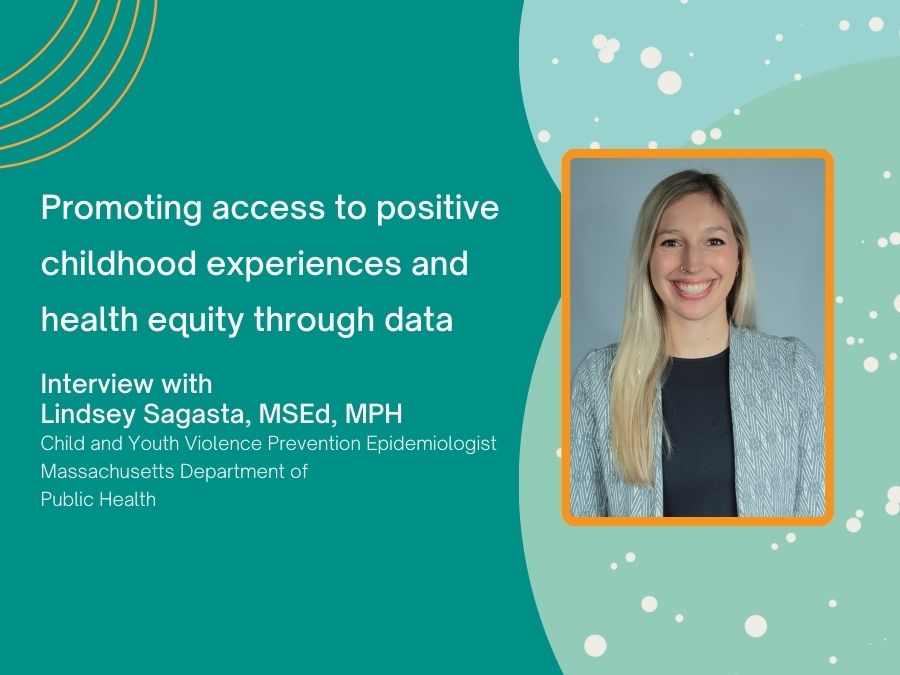
Data presents a picture of childhood experiences and helps inform actions and policy decisions that improve child health and well-being.
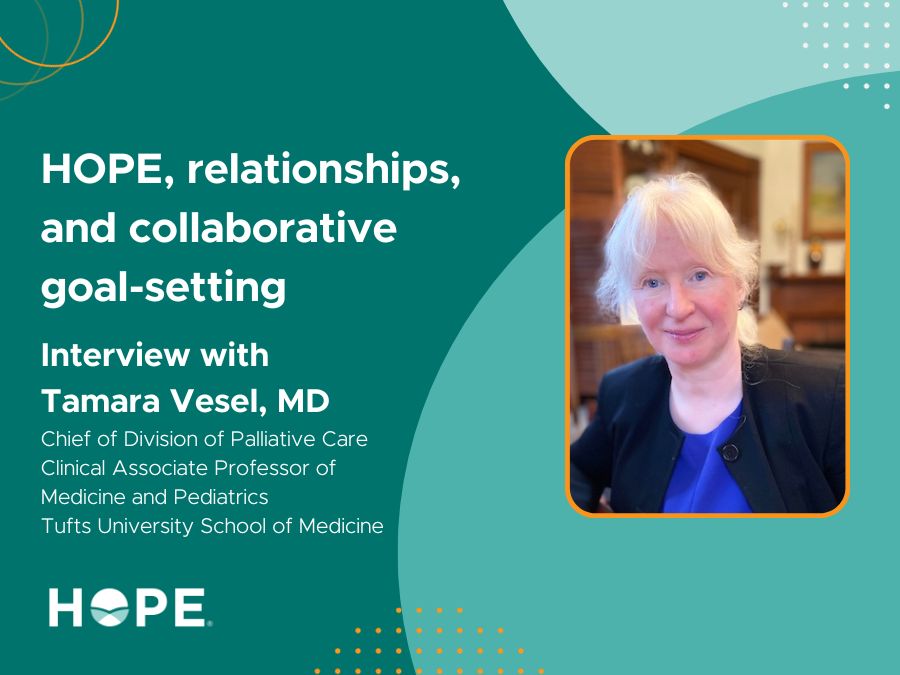
Tamara Vesel, MD, shares her experience building relationships through goal concordant care in a palliative care setting.
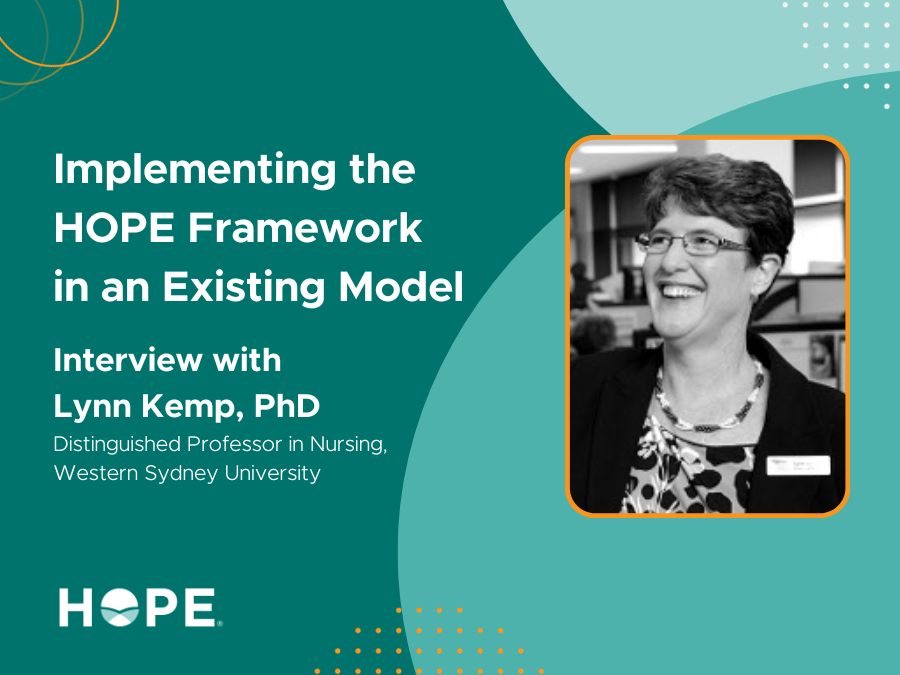
Lynn Kemp, PhD, shares her experiences with integrating the HOPE framework and the Four Building Blocks of HOPE into her work at Western Sydney University.
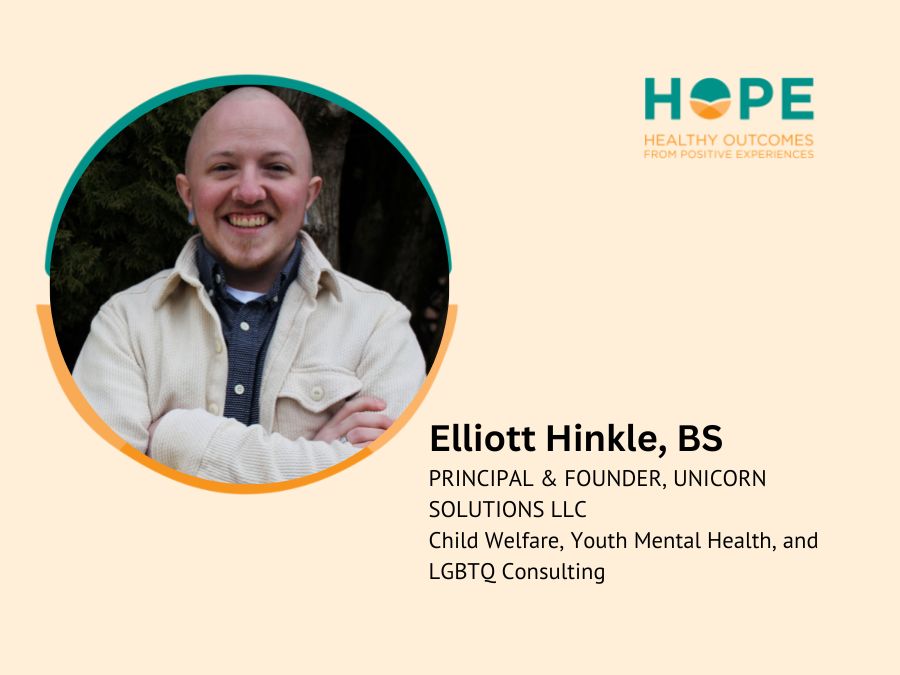
Read our interview with Elliott Hinkle, member of the HOPE National Advisory Board and the HOPE Family and Community Experts Council. “HOPE is like, when someone brings you a problem and you want them to also bring a solution. How are we thinking differently about the work and moving beyond what is bad and what is hard to how we are going to make any change here. It has given me, funnily enough, hope in the work.”
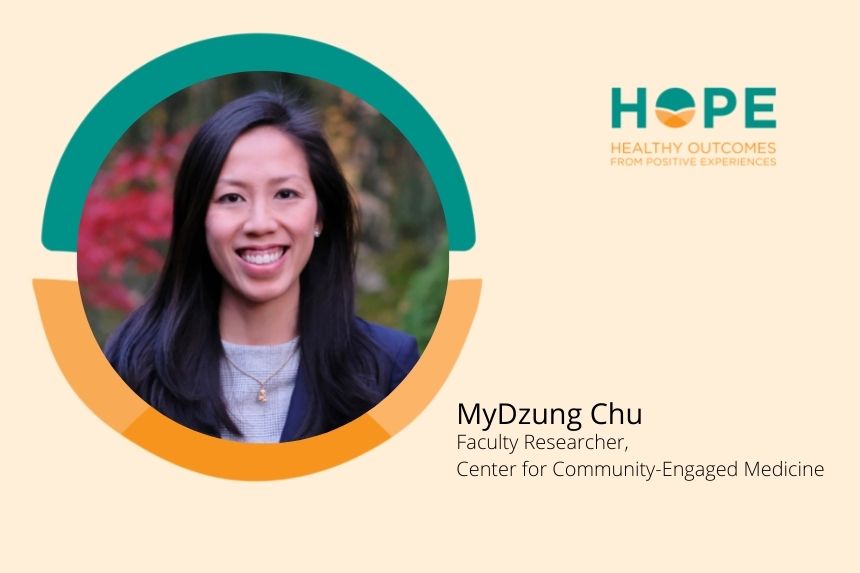
Meet MyDzung Chu, our newest faculty member on the Center for Community Engaged Medicine, working alongside the HOPE team!
Today, we are talking to Jennifer Jones, Chief Strategy Officer at Prevent Child Abuse America. Here, she shares why prevention is important for the well-being of children and families and how HOPE supports that work.
Below is an interview with Audrey Smolkin, the Executive Director of the new Center on Child Wellbeing and Trauma. The HOPE Team worked with Audrey and her team to incorporate the HOPE framework into their new website.
Robyn McGough, MSW, joins HOPE’s Director of Training and Technical Assistance, Amanda Winn, for the fourth vlog in our new series, HOPE Block by Block.
Dr. Kamilah B. Legette, joins HOPE’s Director of Training and Technical Assistance, Amanda Winn, for the third vlog in our new series, HOPE Block by Block.