
Positive experiences can improve mental health in adulthood
Positive experiences, through closeness and social connection, can affect us beyond childhood providing hope for anyone who feels like it is too late.

Positive experiences, through closeness and social connection, can affect us beyond childhood providing hope for anyone who feels like it is too late.

While most adults have positive childhood experiences, people with gender and racial identities experiences them at a lower rate, according to a new HOPE study.

New study with the CDC finds that positive childhood experiences are common among adults but are not equally accessible to all demographic and socioeconomic groups.

We just finished the 2024 HOPE Summit – The HOPE Transformation, learn about highlights and key takeaways from the conference.

New research shows that the more childcare disruptions parents experienced during the pandemic the more stress they experienced.

Growing evidence supports the key role of positive childhood experiences in adult health, including lessening the effects of Adverse Childhood Experiences.

May is Children’s Mental Health Awareness Month, and the HOPE framework is one way to amplify the importance of lifelong mental health.

Trenton Daily shares that HOPE and FAAITH were awarded a grant by Systems for Action, a national Robert Wood Johnson Foundation program.
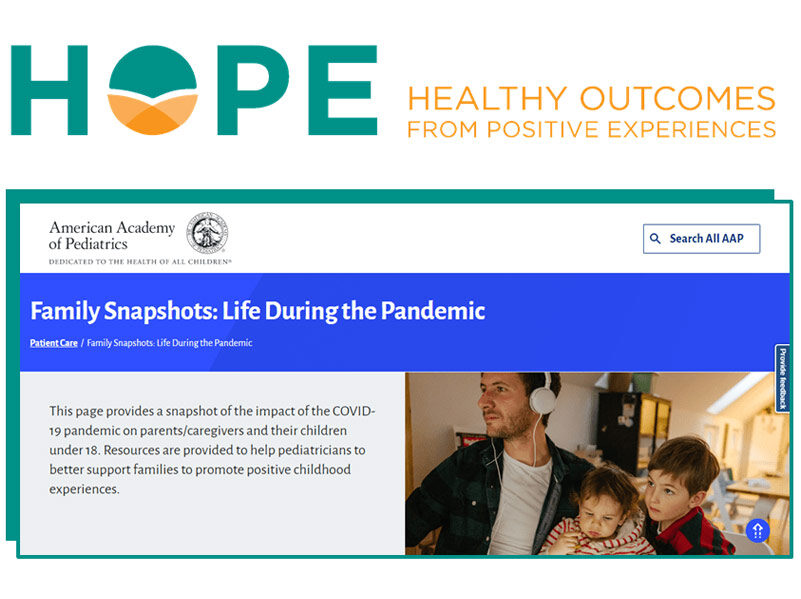
The American Academy of Pediatrics (AAP) has released a year one report “Caregiving in the Context of COVID-19.”

We are thrilled to share that Tufts University School of Medicine (TUSM) has just awarded the HOPE National Resource Center (NRC) a 2022 Innovations in Education Intramural Grant!