Type 1 and type 2 thinking: A key component of the HOPE framework
Learn how a key component of the HOPE framework, Type 2 thinking, can help you slow down and improve your work with children and families.
In collaboration with our Family and Community Experts of HOPE sub-committee, we released our “The value of lived expertise” statement.
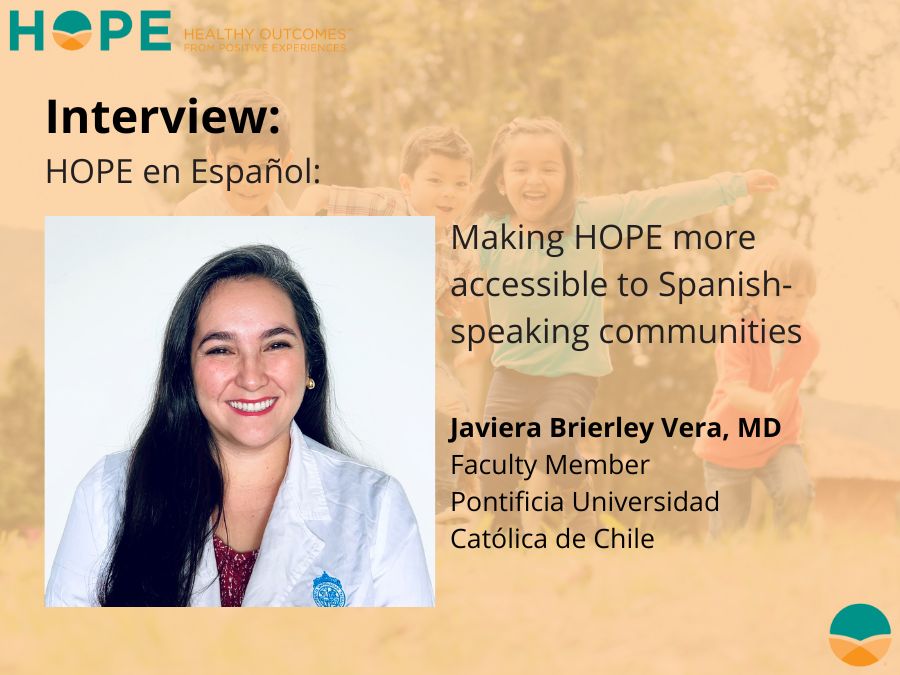
Javiera Brierley Vera, MD is making the HOPE framework more accessible to Spanish speakers, both in the United States and in Latin America.
Whether you are just starting your HOPE journey or looking to expand HOPE further in your practice, check out our resources!
There are many ways where positive childhood experiences (PCEs) can help children thrive even during during difficult times.
Learn about the highlights from these year’s HOPE Summit – Shaping the Future: A Framework for Every Sector.
The Fifth Annual HOPE Summit – Shaping the Future: A Framework for Every Sector will take place next week, register today!
Researchers from the HOPE National Resource Center published the first scoping review on positive childhood experiences and health outcomes
The HOPE National Resource Center is dedicated to making the HOPE framework accessible with resources and training offered in Spanish.
Hear from Junlei Li, 2025 HOPE Summit keynote speaker, on how simple, ordinary interactions with other human beings do in fact matter.