

HOPE implementation evaluation toolkit
Welcome to the HOPE Evaluation Toolkit!
Whether you’re just getting started or already deep in implementation, this resource is here to support you in measuring the impact of the HOPE framework in your organization, one step at a time.
As you begin (or continue) this work, it’s natural to wonder what’s shifting, what’s working, and where to focus next. This is where evaluation comes in – not as something separate from your work, but as a way to stay connected to it.
Before diving into the steps of the toolkit, we’ll start with a closer look at why evaluation matters and how it can support your work in practical, meaningful ways.
Setting the stage: Why evaluation matters
The HOPE framework promotes positive childhood experiences
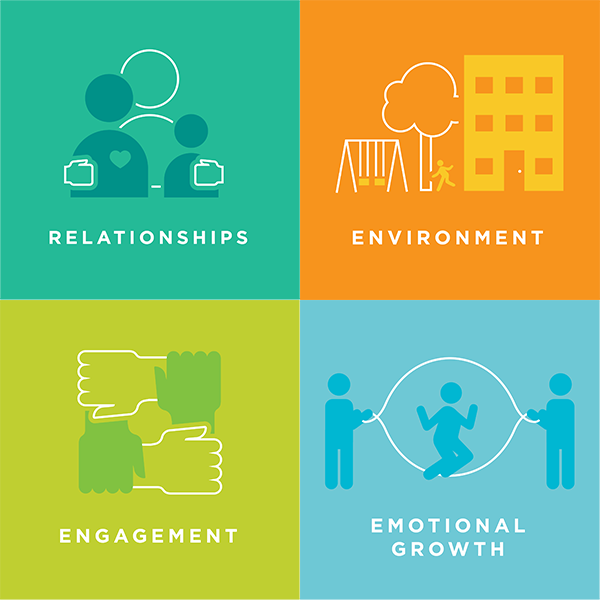
The Healthy Outcomes from Positive Experiences (HOPE) framework, developed by the HOPE National Resource Center, puts the science of positive childhood experiences (PCEs) into action. The HOPE framework focuses on promoting equitable access to the key types of PCEs that have been shown to have the biggest impact on health and wellbeing. We call these key PCEs the Four Building Blocks of HOPE:
- Safe and stable relationships with peers, adults, and caregivers
- Safe environments to live, learn, and play where children have access to their basic needs and are emotionally and physically safe
- Social and civic engagement to develop a sense of belonging and mattering
- Opportunities for emotional growth.
The emerging research on positive childhood experiences
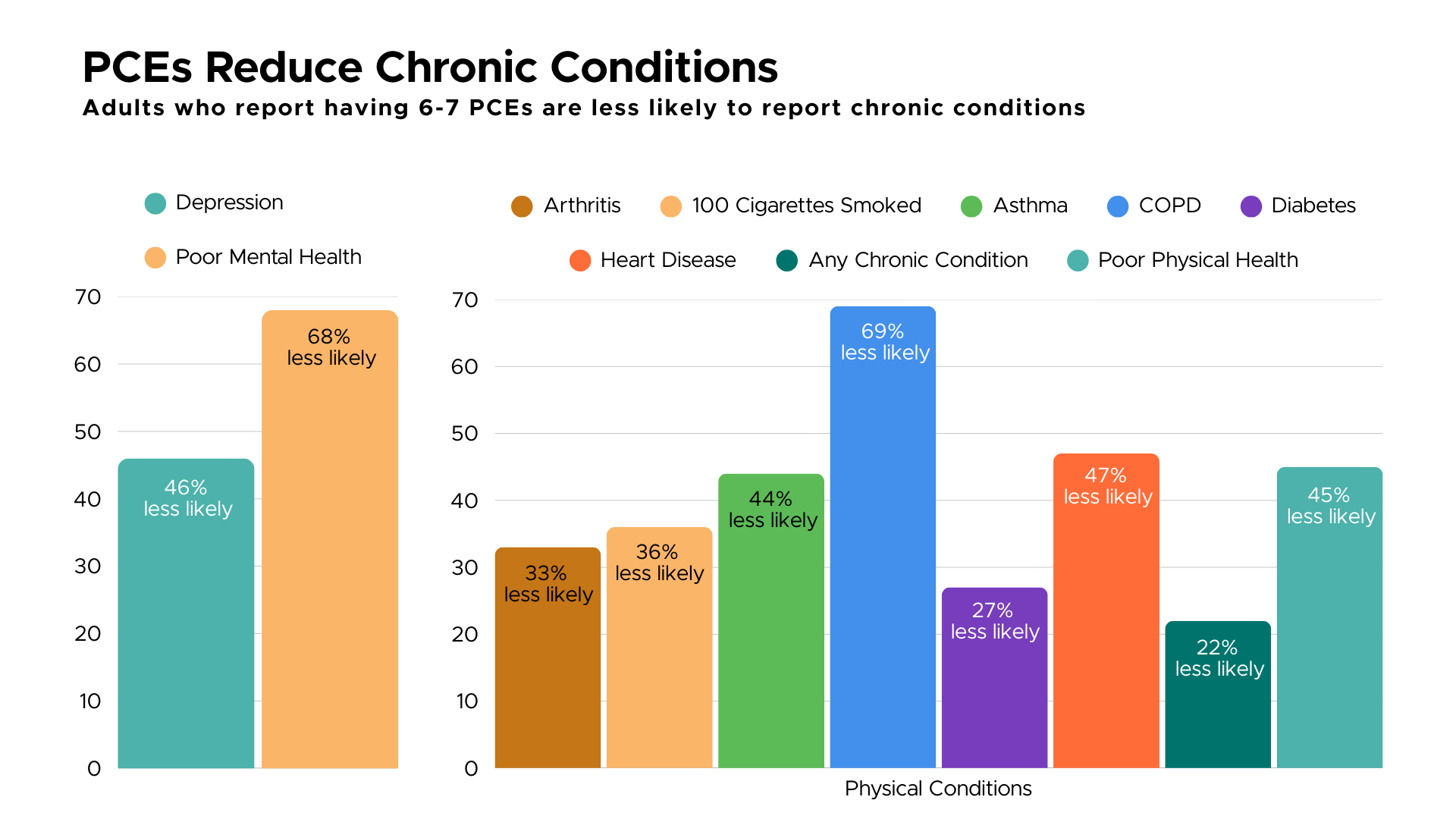
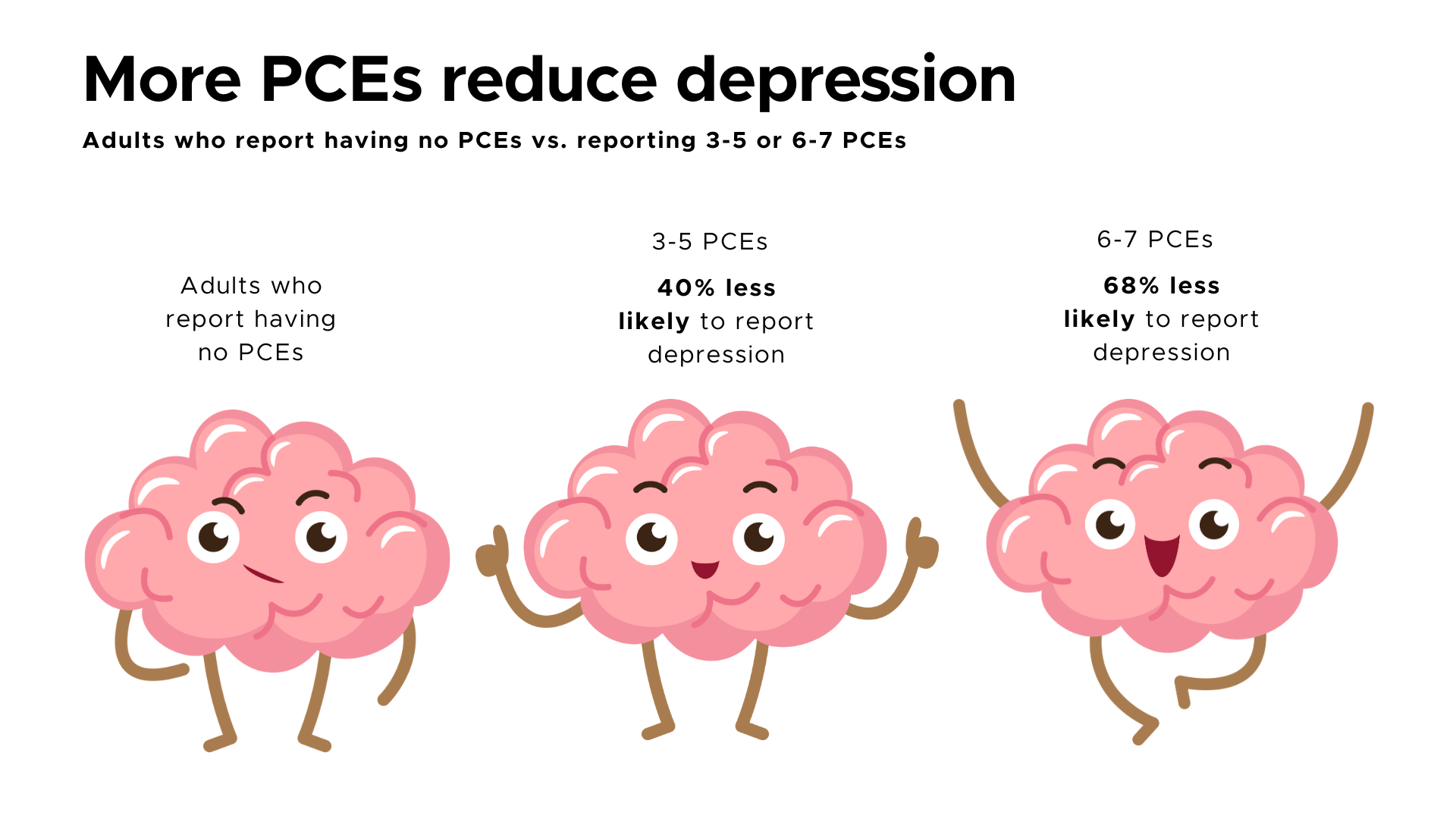
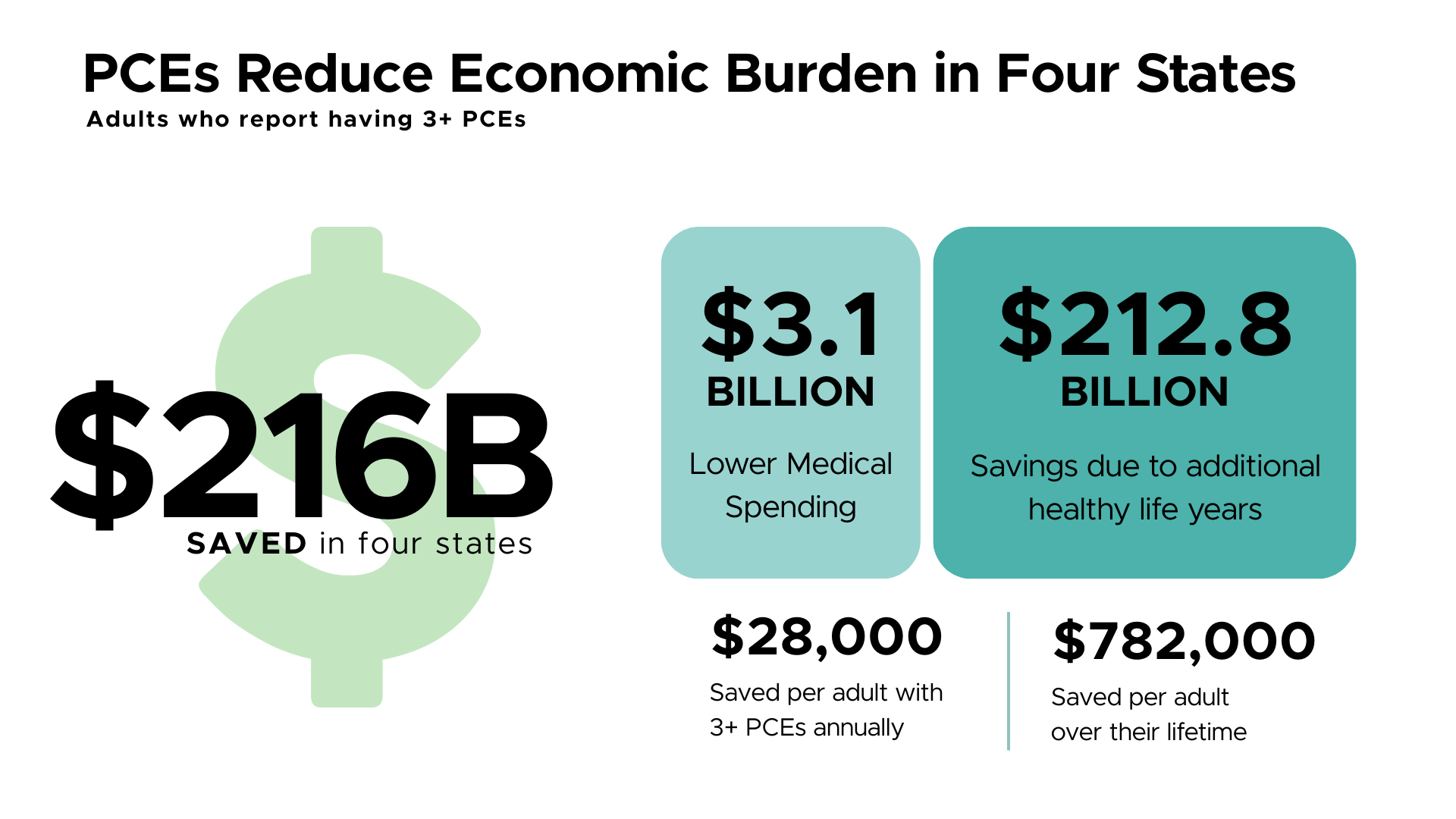
Research demonstrating the power of positive childhood experiences (PCEs) has been growing since researchers published the results of the Wisconsin Behavioral Risk Factor Surveillance Survey Study in 2019. Since then, multiple states, including Montana, Tennessee, South Carolina, Kansas, Michigan, and California, have replicated and expanded on findings showing that the more PCEs an individual has, the better their adolescent and adult health and wellbeing. PCEs are inversely correlated with substance use, mental health diagnoses, and chronic conditions including asthma, chronic obstructive pulmonary disorder, diabetes, and heart disease. This means that the more PCEs someone can recall, the lower their risk of these outcomes. Additionally, the more PCEs someone can recall, the more likely they are to have a college degree and earn more than $50,000 per year. The science behind the power of PCEs exists and is growing every day.
HOPE framework promotes PCEs and benefits organizations
The HOPE National Resource Center has heard from organizations implementing the HOPE framework that in addition to expanding access to positive positive childhood experiences (PCEs), organizations are noticing other benefits from utilizing the framework. Staff retention and job satisfaction increase in agencies implementing the HOPE framework. Families stay engaged in care longer, follow through with referrals at higher rates, and report better relationships with the providers and/or staff members. HOPE implementation seems to create conditions for thriving, even in the short-term. Many of these results, however, have been anecdotal.
As the HOPE framework continues to gain traction across sectors and systems that serve children and families, we want momentum and enthusiasm to be matched by evidence that shows how principles of the HOPE framework translate into measurable improvements. In other words, now is the time to start showing the short-term impacts of the HOPE framework with data.
HOPE is a flexible and adaptable framework
Since HOPE is an adaptable framework, implementation – and therefore, evaluation – will look different from sector to sector and organization to organization.
For example, the way an elementary school implements HOPE will likely look very different from how a pediatric primary care clinic or child welfare department might implement. The short-term outcomes that motivate an organization to implement the HOPE framework vary too, from increasing school attendance to reducing substance use to achieving family reunification.
The HOPE National Resource Center knew HOPE evaluation methods needed to be as flexible and adaptable as the HOPE framework itself while feeling helpful, not burdensome, to staff, children, and families.
Introducing the evaluation strategy: A Quality Improvement approach
Why a QI approach?
The HOPE National Resource Center chose to adopt a quality improvement (QI) approach to evaluation because it can measure impact from adaptable frameworks like HOPE. QI involves collecting and analyzing data to improve the quality of what you have chosen to implement. With a QI approach, organizations can analyze their specific HOPE implementation project’s impact within their local context and tailor it as needed.
This approach has been successfully used to evaluate other flexible frameworks, such as Project DULCE (Developmental Understanding and Legal Collaboration for Everyone) and supports accountability, growth, and evaluation of impact throughout implementation.
We also believe that a QI approach to HOPE implementation evaluation will:
- Provide shared expectations for evaluation of HOPE implementation
- Offer a range of evaluation tools
- Guide implementers on ways to integrate qualitative (stories) and quantitative (numbers) data to tell a clear story of the impact of HOPE implementation
- Center equity and relevance to the diverse communities implementing HOPE
- Build collective knowledge around the impact of the HOPE framework
HOPE framework Core Components
The HOPE framework Core Components represent the minimum expectations for a project to be considered HOPE implementation.
Core areas include:
- Internal Culture: Aligning leadership, decision-making, physical and virtual environments, and work culture with the HOPE framework
- Equity Advancement: Assessing access to the Four Building Blocks of HOPE and then creating policies and practices that reduce barriers and increase accessibility to PCEs; and then creating policies and practices that reduce barriers and increase accessibility to PCEs;
- Policies: Applying HOPEful principles in organizational documents and policies;
- Intakes: Incorporating HOPEful principles in intake forms and processes, potentially also including case planning;
- Screenings/Assessments: Designing screening and assessment forms and processes using HOPEful principles;
- Referrals: Incorporating HOPEful principles into the development of referral and warm handoff processes;
- Program Development: Developing programming specifically intended to promote access to the Four Building Blocks of HOPE.
You can sign up a staff member(s) for our HOPE Champion Certification program or find a local HOPE Champion near you.
Outcome domains include:
- Access to PCEs in the short term: assessing access to the Four Building Blocks of HOPE at multiple times
- Provider–family relationships: e.g., satisfaction with and/or quality of relationship
- Family/child outcomes: e.g., retention rates, out-of-home placements, referral follow-through, attendance, school referrals, mental health symptoms, physical health symptoms
- Staff outcomes: e.g., job satisfaction, burnout rates, staff retention, staff turnover
How This Toolkit Works
This toolkit is not a course, and it’s not something you need to complete in one sitting.
Instead, it’s a set of nine connected (but flexible) steps. Start where it makes the most sense for your work. Each section is designed to stand on its own, while still connecting to a larger process of learning and improvement.
The Steps
- Assess readiness
- Review your data (before collecting more)
- Choose an implementation project
- Develop a clear Aim Statement
- Select measurable data sources
- Build an implementation plan
- Plan for data collection
- Test and adapt using Plan-Do-Study-Act (PDSA) cycles
- Use and share what you’re learning
At the start of each section, you’ll find a few simple questions to help you decide: Is this the right step for where we are right now?
Within each section, you’ll also find a clickable table of contents, so you can move through the material in a way that fits your needs, whether that’s reading the full section or jumping to specific parts.
What to Expect in Each Section
Each section follows the same structure so it feels familiar and easy to use:
- Short introduction: Background on what this step is and how it connects to the larger QI process
- Guidance and questions: Prompts to help you think through the work in your own context
- Optional tools and templates: Worksheets if you want more structure (but not required)
- Reflection questions: Space to pause and make sense of what you’re learning
- Case example: A real-world example showing what this step can look like in practice
As you move through the toolkit, remember to include your HOPE Champion. They help guide the process, maintain alignment with HOPE principles, and support reflection along the way.