

Section 4: Identify your Aim Statement

Is this section for me?
After choosing your implementation project, we recommend organizations continue onto this section for guidance on identifying an Aim Statement to clearly name what they want to change and why. However, some organizations may have already identified their Aim Statement. Before beginning this section, let’s see if you have already completed it.
- Have you already decided what you what to change, by how much, and for whom?
- Is this statement specific, measurable, achievable, relevant, timely, inclusive, and equitable?
If so, you’ve completed this step and can move onto the next section, Choosing your data sources, or you can review this section to confirm you are satisfied with your Aim Statement.
Introduction to identifying your Aim Statement
An Aim Statement communicates what you intend to accomplish, by how much, by when, and for whom. It gives your improvement work the clarity, purpose and a shared end goal needed to succeed. A strong Aim is grounded in insights drawn from purposeful, actionable data review, not staff preferences, vague ideas, or “gut feelings.” It also meets all the criteria of a SMARTIE goal: specific, measurable, achievable, relevant, timely, inclusive, and equitable.
How this step fits into the larger QI process
Your Aim Statement comes after you have assessed readiness, looked at your data, and chosen an implementation project. It embodies the improvement question you asked while reviewing data and should:
- Clarify the problem or opportunity
- Establish a measurable target
- Align with team availability, effort, and expectations
- Focus decisions about measures and change strategies
The Aim Statement is not a wish; it should be anchored in what your data suggests is both meaningful and feasible to improve. Your Aim clarifies the work needed to achieve your desired outcomes.
Guidance and questions to ask
Use insights from your data review to ask:
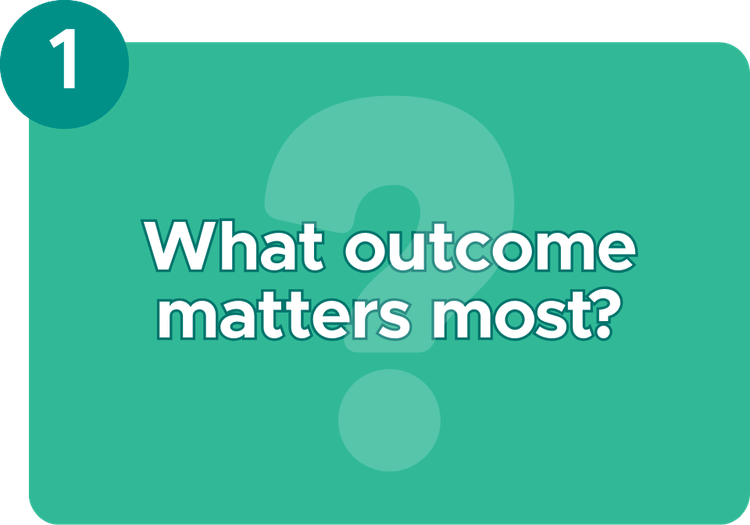
- What change would make the biggest difference?
- When we look at the data, where are the clearest opportunities?
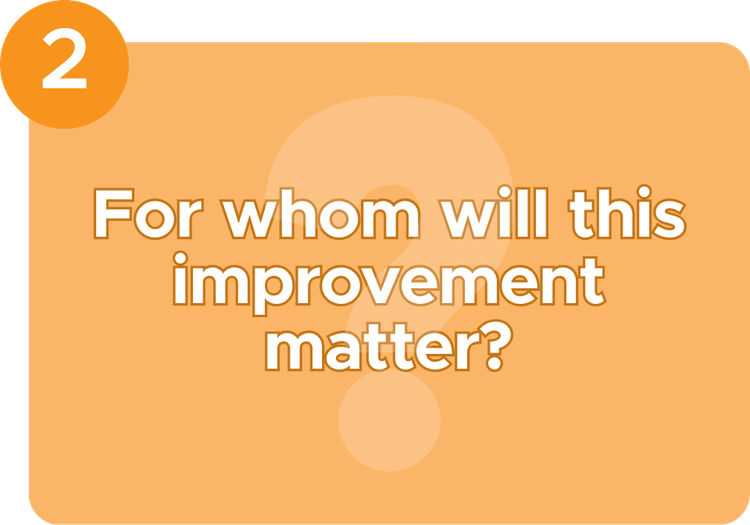
Be specific about the population, program, or process that will benefit.
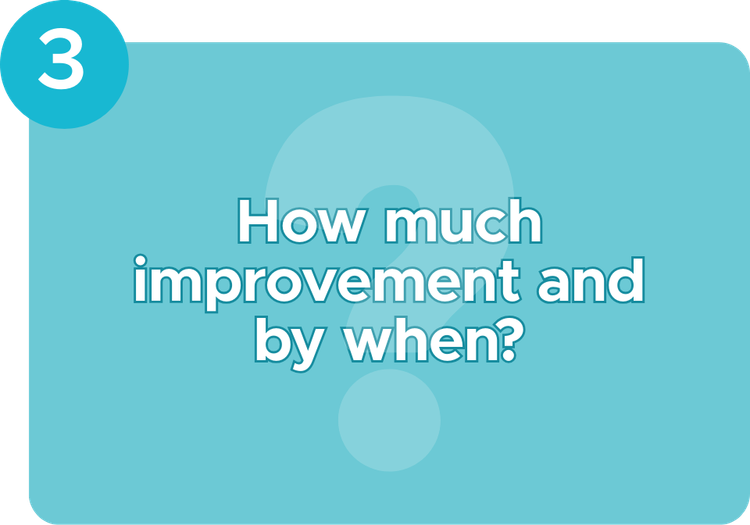
Set targets that are concrete, realistic, and time-bound.
Avoid overly broad statements. A practical aim is something everyone on your team can clearly understand and reasonably influence. Anyone should be able to explain the Aim Statement, not just those who were a part of writing it.
The aim should feel like a direct answer, or a step toward an answer, to the key questions that emerged during your data review.
Templates and resources
Here are a few additional, optional, tools that might help as you work through the Guidance and Questions to Ask.
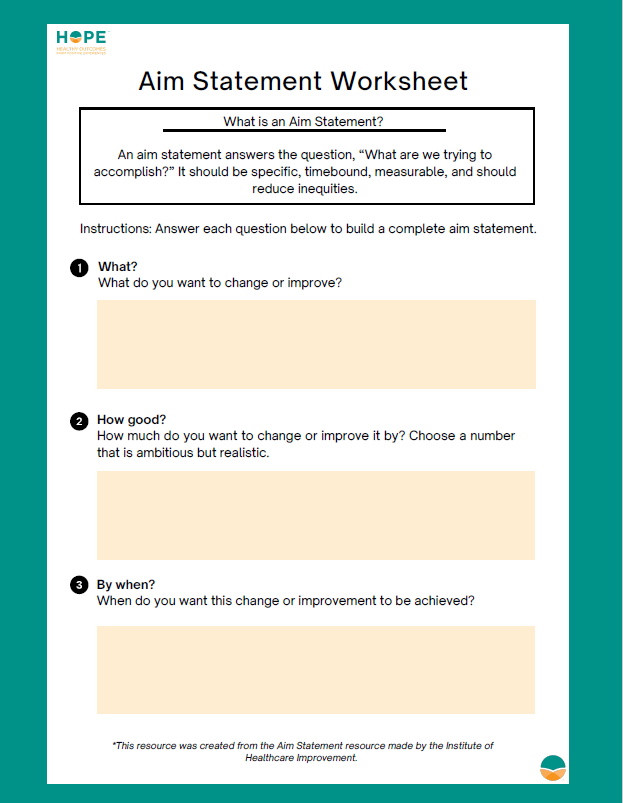
Aim statement worksheet
Examples of Aim Statements
- By July 1, 2026, the San Diego Center for Children will enhance staff job satisfaction by increasing staff-reported access to the four HOPE building blocks by 30%.
- Within 6 months, staff will integrate questions about the Four Building Blocks of HOPE into all intake processes and 50% of new treatment plans will include at least one relevant treatment goal related to the Building Blocks.
- Within 12 months, we will increase student connection and reduce loneliness by 20% for 1st year students enrolled in the Women’s Resource Center WAGE program by incorporating PCE-promoting activities into the program curriculum.
Aim checklist
- Is it specific?
- Is it measurable?
- Is it realistic given our capacity?
- Does it align with actionable data insights?
- Is it timebound?
- Does it reflect meaningful change? (not just an activity that we can say we did)
Reflection prompts
- What did the data review show that makes this Aim important?
- How will we know we are making progress?
- What is the smallest measurable difference that would matter?

In Practice: Developing an Aim Statement
Riverside Middle School had selected a specific implementation project in mind, focused on intakes and referrals for 6th-grade students experiencing attendance concerns.
Riverside drafted and refined an Aim Statement during a short working session involving an administrator, a counselor, and a teacher. They focused on clarity, scope, and feasibility, and avoided outcomes that felt outside their control. Their final Aim was:
By May 30, Riverside will reduce chronic absenteeism among identified 6th-grade students by strengthening connections to a trusted adult and using a HOPE-aligned intake process before escalating mental health referrals.
Keep going!
With a clear Aim in place, the next question becomes: how will we know if we are making progress? Identifying measures connects your goal to observable change and builds learning into the work from the beginning.
You’re ready to move on if:
- Your Aim is clear, specific, and measurable
- It reflects what you want to improve and for whom